YiMatrix · Academy Journal

News Center

Learn fortune-telling knowledge and stay updated

22

22 published articles

"What is above form is called the Way; what is within form is called the vessel"—A "layering" written over two thousand years ago in the Xici

Featured essay

"What is above form is called the Way; what is within form is called the vessel"—A "layering" written over two thousand years ago in the Xici

"What is above form is called the Way; what is within form is called the vessel"—this line you memorized comes from the Xici commentary of the Book of Changes. The Xici does not annotate any single hexagram; it is the only "system manual" in the Yijing. And this line is a declaration of "layering" written over two thousand years ago.

南荒Jun 28, 2026

Journal archive

Recommended

Learn fortune-telling knowledge and stay updated

An Algorithm Hidden in the I Ching, Three Thousand Years Older Than the Turing Machine04
南荒May 30, 2026

An Algorithm Hidden in the I Ching, Three Thousand Years Older Than the Turing Machine

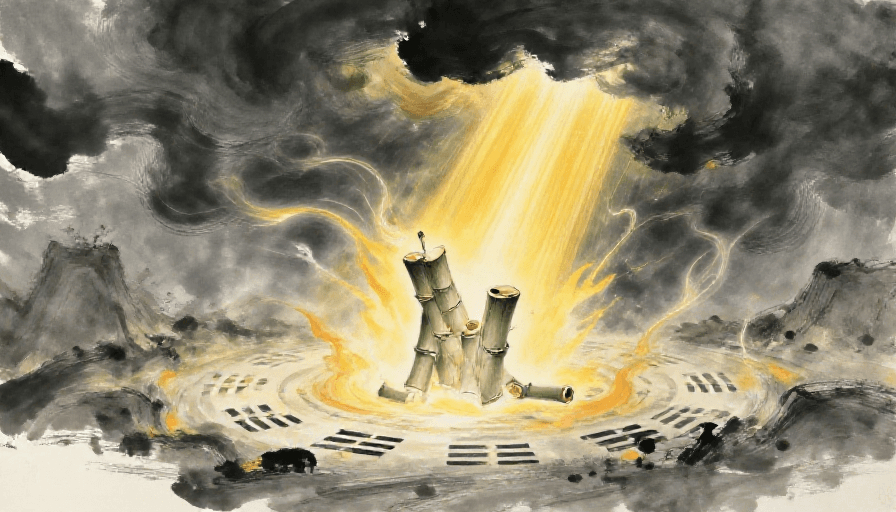
"The number of the Great Expansion is fifty, and its use is forty-nine." This line from the *I Ching*'s "Great Appendix" translates into code as an algorithm with initialization, loops, and termination conditions. Using three lenses—history of mathematics, computer science, and information encoding—we reinterpret the "numbers" in the I Ching: not mysticism, but the earliest written algorithm that still runs today.

Are You the Qian Hexagram or the Kun Hexagram? The Ancients Classified the World with 8 Symbols—3-Minute Self-Test06
南荒May 22, 2026

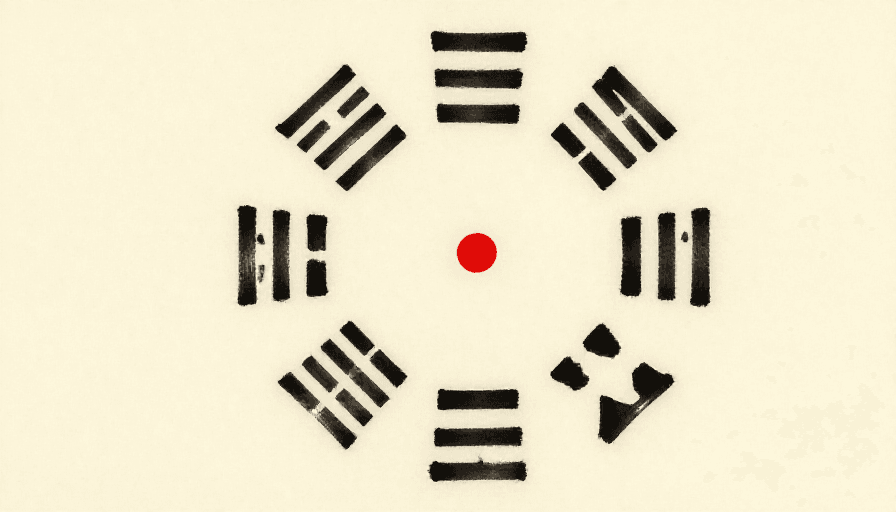
Are You the Qian Hexagram or the Kun Hexagram? The Ancients Classified the World with 8 Symbols—3-Minute Self-Test

At 8 a.m., on the subway. You stand in the corner of the carriage, staring at your phone. There's a meeting today, and your boss wants you to make a decision. You know exactly which plan you want to push—but the colleague sitting across from you just posted the PPT of another plan in the group chat. In just a few sentences, your direction wavers. You hesitate. Should you follow the boss's hint from yesterday, or put forward your own plan? Push or hold back? Speak up or listen first?

The Eight Trigrams Are Not Divination, but Binary — Leibniz Understood Fuxi's Diagram 24 Years Later07
南荒May 19, 2026

The Eight Trigrams Are Not Divination, but Binary — Leibniz Understood Fuxi's Diagram 24 Years Later

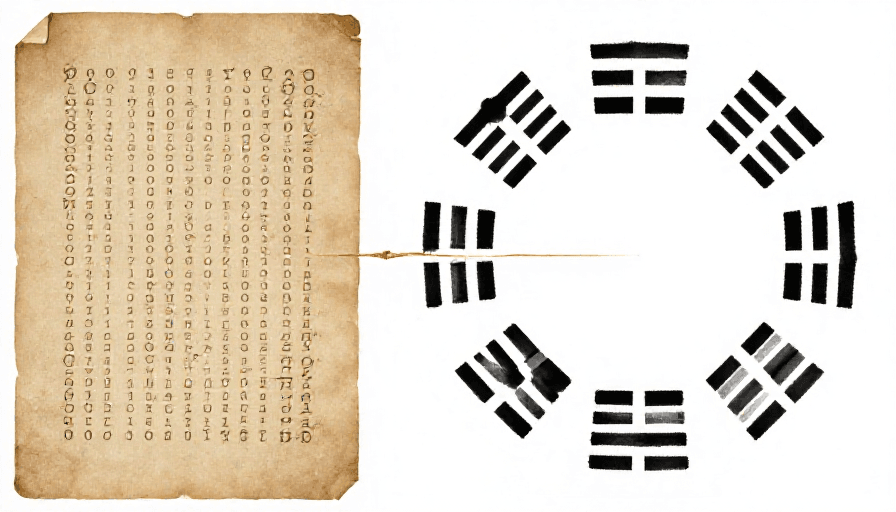
On April 1, 1703, Leibniz received Fuxi's Sixty-Four Hexagrams Sequence Diagram and was astonished to find that the yin and yang symbols in the trigrams perfectly corresponded to the binary system he had invented 24 years earlier. This is not about the Chinese teaching Leibniz, but about two civilizations, separated by three thousand years, independently arriving at the same mathematical structure. The Eight Trigrams are not divination; they are humanity's earliest information encoding.

Are You Being "Generated" or "Controlled" in What You Do? The 5 Pairs of Generation and Control in Five Elements — See Where You're Stuck09
南荒May 13, 2026

Are You Being "Generated" or "Controlled" in What You Do? The 5 Pairs of Generation and Control in Five Elements — See Where You're Stuck

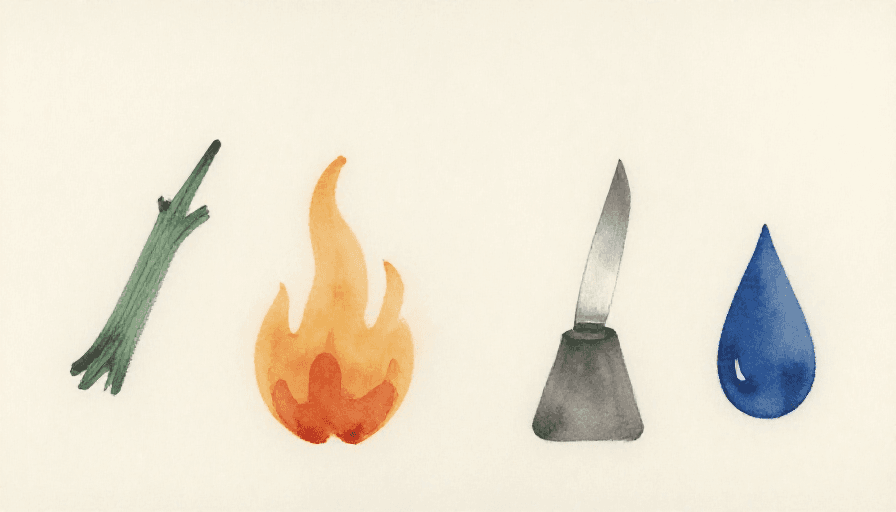
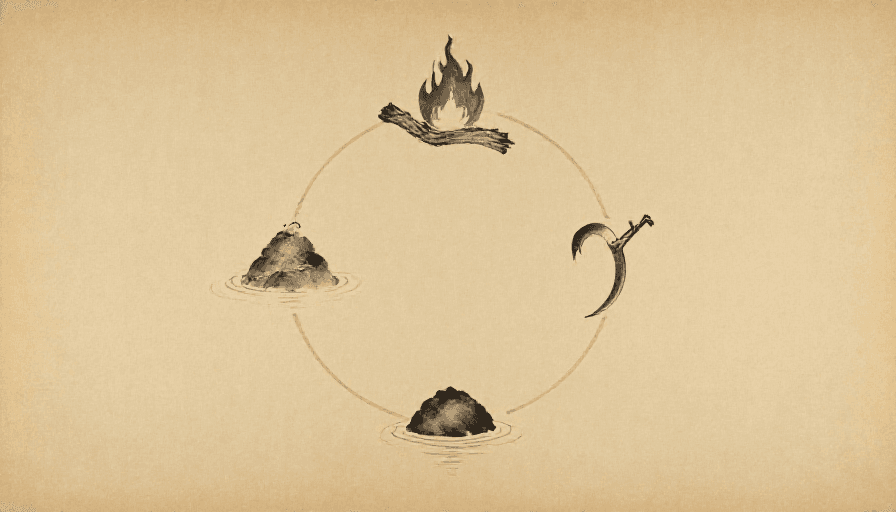
You want to push forward but get stuck by "think it through"; you want stability but get disrupted by new opportunities; you want to cut losses but can't let go; you want peace but are crushed by responsibilities. This isn't a personality issue—it's the control cycle of the Five Elements. Control isn't hatred; it's about position. The Five Elements aren't five things but five modes of operation, where adjacent elements generate each other and elements one step apart control each other. Being controlled doesn't mean someone is harming you; it means you're stuck in the wrong position.

Are You in the Fu Hexagram or the Guai Hexagram? The Ancients Used 12 Hexagrams to Define Life's Rhythms — A 3-Minute Self-Check14
南荒May 3, 2026

Are You in the Fu Hexagram or the Guai Hexagram? The Ancients Used 12 Hexagrams to Define Life's Rhythms — A 3-Minute Self-Check

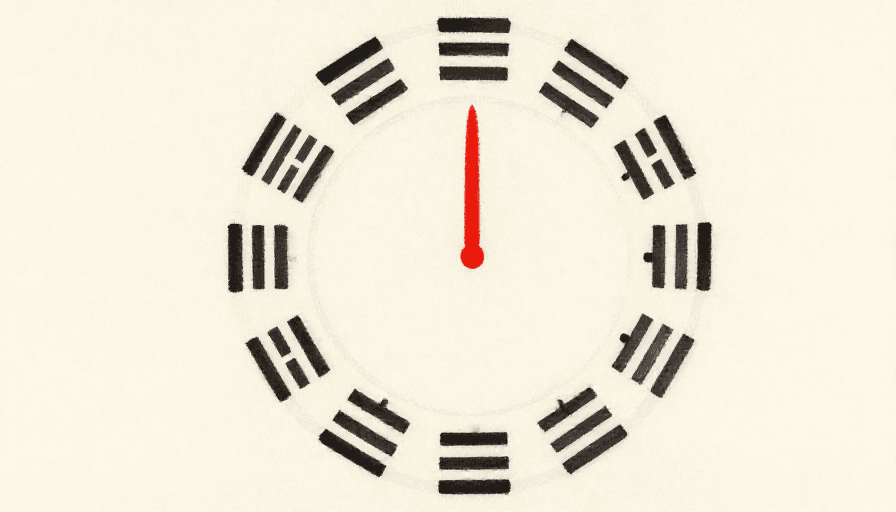
Are you in the Fu hexagram or the Guai hexagram? The ancients used 12 hexagrams to define life's rhythms—a 3-minute self-check on yin and yang. You won't stay at the peak forever, nor at the bottom forever. The key to understanding yin and yang is rhythm. This article is 2,500 words, a 3-minute read, but it will save you the effort of consulting 10 I Ching books later. Last time, we discussed that yin and yang are not opposites but switches. Today, we talk about the second thing.

Yin and Yang Are Not Opposites—The First Lesson You Learn in the I Ching, 90% of People Get Wrong15
南荒May 2, 2026

Yin and Yang Are Not Opposites—The First Lesson You Learn in the I Ching, 90% of People Get Wrong

Yin and yang are not opposites. Let me repeat: yin and yang are not opposites. Open any book on the I Ching, and the first chapter almost always says: 'Yin and yang are opposites—black and white, male and female, good and bad.' This is a flaw passed down from the Republican era, later reinforced by the 'unity of opposites' framework in high school politics classes, ingrained in generations of students.

Were the Eight Trigrams Originally Unrelated to Yin and Yang? Numbers on a Bronze Vessel Hold a 3,000-Year-Old Secret20
南荒说Feb 24, 2026

Were the Eight Trigrams Originally Unrelated to Yin and Yang? Numbers on a Bronze Vessel Hold a 3,000-Year-Old Secret

We often say 'yin-yang and the eight trigrams' together as if they were inherently paired. But archaeological evidence tells us: the eight trigrams originated from the Shang-Zhou numerical divination system, while yin-yang came from a philosophy of sunlight and shadow on hillsides—two completely independent systems that took over a millennium to converge in the 'Commentaries on the Book of Changes'.